
Breweries, craft beer & drinks retail
Every line is a cleaning run of its own.
In a drinks business the quality hangs off the technology behind it — the tap system, the keg fridge, the separation between production and guest area. That is a trade, not a cleaning schedule, and it deserves to be documented as one.
From the brewhouse through the taproom to the bottle shelf — one process, one record.
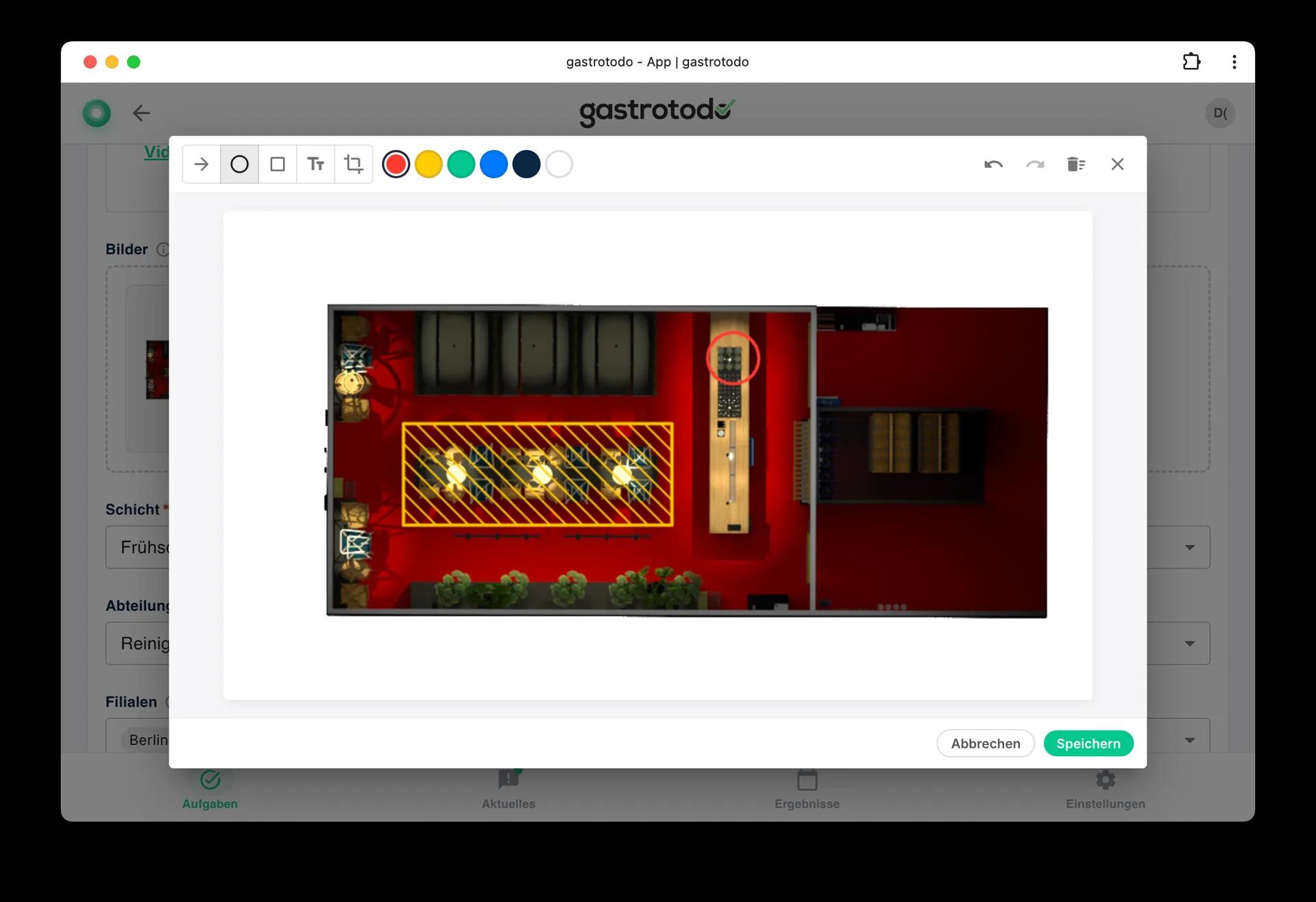
The target state is a picture
What a stocked bottle shelf looks like, how the row of glasses stands, how the tap system should look after cleaning: in drinks businesses that is hard to describe and easy to show. Which is why practically every task here carries a reference image.
Whoever sees the target state does not have to guess what "properly stocked" means — and the result looks the same on every weekday, whoever is on duty.
A picture on the task saves the follow-up question. It helps most where descriptions run into language barriers.
Three phases per part of the business, not two
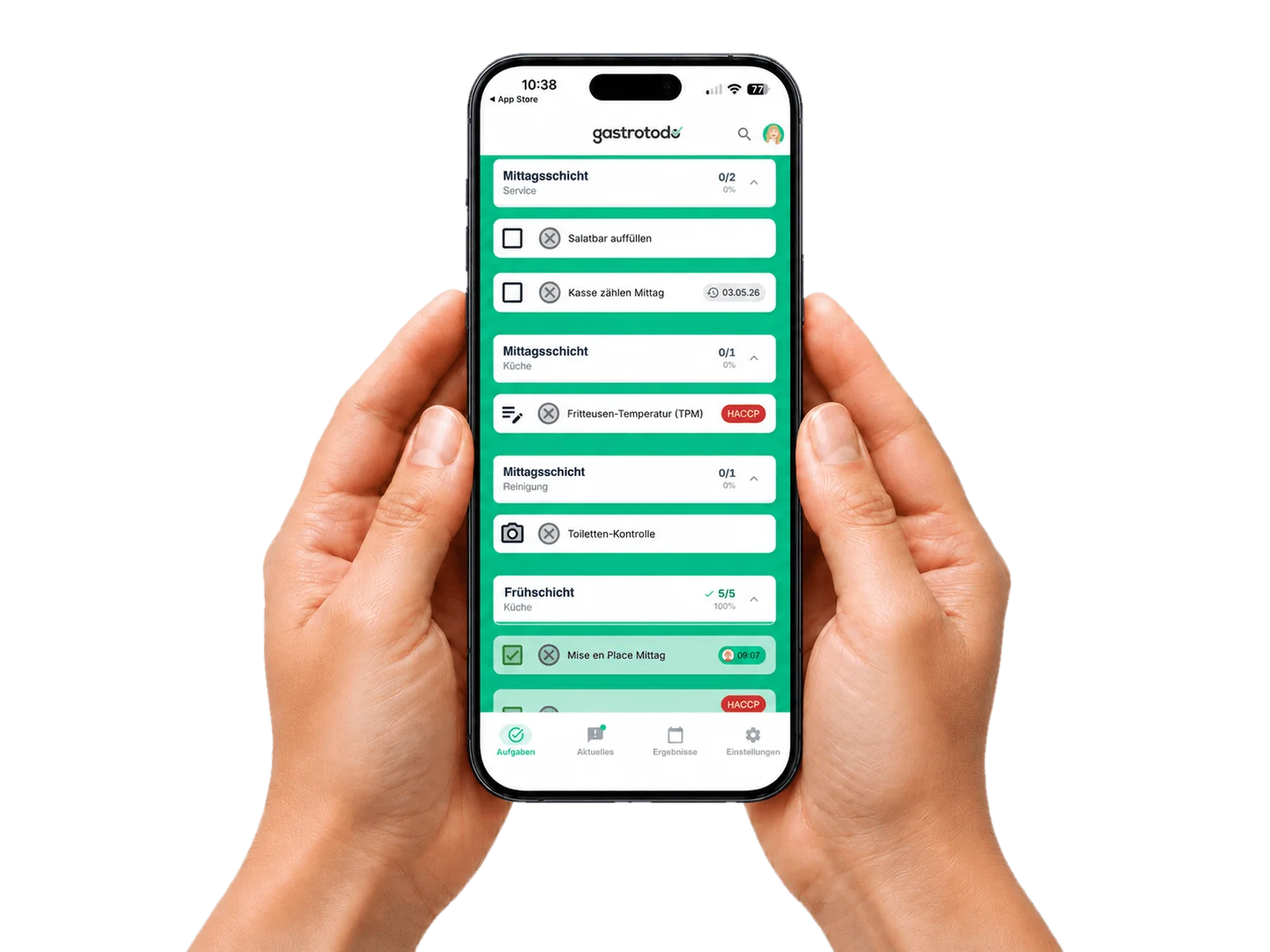
Taproom and beer garden run separately — and both with three lists instead of two: opening, service, closing. The middle phase is what makes the difference. It holds the things that have to happen while guests are in: check the restrooms, collect glasses, restock cutlery, keep the store door shut.
Anyone running only a before and an after loses exactly the hours in which the business actually operates. In a house with taproom, beer garden, kitchen and production those are the decisive ones.
A beer garden is built every day
Roll up the marquee sides, lay out cushions and blankets, set up the games, build the glass and crockery return, place the cigarette station — and put it all back at night. That is not a cleaning schedule, it is a set-up and take-down list that repeats daily.
On top of that the weather is a condition: put the games away dry, close the children's tent, save things from damp. Businesses write such caveats into the task title today so that half the list does not look pointless on a rainy day.
The tap system is a trade, not a cleaning job
The measuring points here are the taps, the cleanliness of the beer lines, the keg fridge — and the system is tracked by its number of lines. Every variety on tap means a line of its own, a hose of its own and a cleaning run of its own.
What matters is where that task sits: not in service but in production and logistics. That settles responsibility too — it is the brewer's job, not the server's. The same goes for separating production from the guest area: keeping those doors shut is a recurring task, not a given.
Even when a contractor does the cleaning, the sign-off stays in house. It lands in the HACCP documentation with date and person.
„We zetten gastrotodo in om consistente standaarden in ons bedrijf neer te zetten. Taken staan duidelijk omschreven, zodat zelfs oproepkrachten precies weten wat ze moeten doen. Vooral de geïntegreerde HACCP-registratie heeft ons overtuigd.“

Henning, Algemeen directeur · Wittorfer Brauerei
What breweries and drinks businesses ask first
We run a brewery and a pub. One team or two?
Usually one team with separate areas — production and logistics on one side, taproom, beer garden and kitchen on the other. That keeps the lists apart while the reporting stays together.
We have a bottle shop next to the bar. Does retail fit alongside?
Yes, and it is a process of its own. Merchandising, making space for the next delivery, checking receipt rolls and detergent, recording turnover — those are retail tasks that sit next to the bar's glass washer.
A contractor cleans our tap system. Do we still have to record it?
The work is outsourced, the check is not. The usual approach is a task on a fixed cycle where the cleaning is inspected and signed off — with a signature if you want one. The log then shows when it was last cleaned and who verified it.
Our beer garden only runs in summer. Rebuild it every year?
No. The beer garden rests over winter and is back unchanged in spring. The taproom is untouched by it.
Klaar om je zaak te structureren?
Begin met gastrotodo — 7 dagen gratis en daarna door met het abonnement dat bij jouw zaak past.